Highlighting Mental Imagery in CBT
By Professor Emily A Holmes
Department of Women’s and Children’s Health, Uppsala University, Sweden
School of Psychology, University of Southampton, UK

My work concerns the science and practice of imagery-based cognitive therapy, as well as new techniques developed in reference to trauma memories and bipolar disorder.
The Science of Mental Imagery
Mental imagery occurs when we see in our mind’s eye or hear with our mind’s ear, and so forth. It is a wonderful human ability that allows us to visualize the future and recall past experiences (such as our last holiday). However, if the content of our mental imagery is negative and unwanted, it can be associated with psychopathology.
From a
cognitive science perspective, mental imagery involves an experience like perception in the absence of a percept: seeing in our mind’s eye, hearing in our mind’s ear, for example. Mental imagery has extremely interesting properties – when we imagine, we use similar brain areas to actual perception, and our experimental work has shown that imagery feels “more real” than verbal thought. Mental imagery also enhances memory and learning. Critically for CBT, we now know that mental imagery acts like an “emotional amplifier”. Through a series of experiments, we were able to demonstrate that
mental imagery has a more powerful impact on emotion compared to verbal processing.
Clinical Implications of Mental Imagery
From a clinical practice perspective, intrusive, affect-laden images cause distress across psychological disorders. Imagery-based intrusive memories and “flashbacks” to a past trauma are the hallmark of post-traumatic stress disorder (PTSD). Intrusive mental imagery can also occur of the future. We coined the term “flashforwards” to describe future-oriented mental imagery of suicidal acts or fueling manic pursuits in bipolar disorder. Thus, intrusive emotional imagery is transdiagnostic, occurring not only in PTSD and suicidality but across a wide range of psychological difficulties, including bipolar disorder, depression, OCD, panic, addiction, pain, complicated grief, etc. As we have learned from the science, compared to verbal thinking, mental imagery tends to feel more emotionally charged, more real, more immediate, and people are more likely to act on their imagery than verbal thoughts. This has important clinical implications. When distress is driven by imagery, such as intrusive memories, feared future scenes, or aversive moments replayed again and again, those images themselves (even if brief!) become important targets for assessment and treatment.
Assessment of Mental Imagery

Using imagery techniques is not a replacement for established cognitive–behavioral approaches, but rather a way of extending our clinical toolkits. In both research and clinical work, the best place to start is a detailed assessment of mental imagery associated with a given presenting problem. It never ceases to amaze me how mental imagery can be so fleeting (just 200 milliseconds!) yet still have such a powerful impact on us (but then so would a tiger with big teeth if you saw it for 200 milliseconds!). Perhaps because it is often so brief, it is easy to underestimate how much it might be affecting us. Key to an assessment is slowing down and providing an understandable definition of mental imagery compared to verbal thinking. Another reason clients might not spontaneously report imagery is that it might feel real, so again a careful definition and thoughtful explanation can be valuable. Thus, assessment involves clarifying what is meant by mental imagery, gaining a broad sense of the types and frequency of images experienced, and collaboratively identifying a particularly clinically salient image for focused work.
Micro-Formulation: Treatment for Troublesome Imagery

The next step after ascertaining whether someone has mental imagery and what it is of, we have called ‘micro-formulation’. This is a technique in which we use a visual template (available for free on my book website: https://www.cms.guilford.com/holmes-forms) to place a brief description of the image in the centre, and then collaboratively map out the associated emotions, appraisal, and the power of that particular image in quite some detail. This methodical assessment approach, which illuminates the impact a specific image can have, is often described by clients as particularly helpful.
The imagery micro-formulation also helps us select a rationale for treatment techniques, many of which will already be in our existing CBT toolkit! For example, if the power of a given image over someone is that it feels real and that it might really happen (let’s continue with the previous example, say a mental image of a large striped tiger walking into the room!) then this could be challenged by a behavioral experiment. Indeed, many techniques to work with troublesome imagery are as part of our CBT toolkit, such as behavioral experiments, Socratic dialogue, meta-cognitive techniques, etc. There are also imagery-specific techniques such as imagery rescripting, which is gaining increasing popularity in CBT and can be done in several ways. One relatively straightforward way to do imagery rescripting we have described in our 2019 book, listed below.
The Imagery-Competing Task Intervention (ICTI): A Novel Treatment Approach
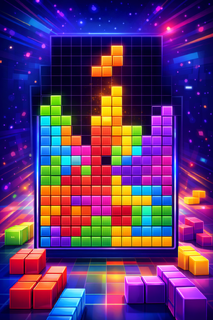
What if we could create a brief and gentle way to stop a trauma memory from flashing back? By focusing on the perceptual nature of imagery, we sought to find a mechanism to stop unwanted images coming to mind. For the last two decades, I have worked on the development of a novel intervention approach—the idea of dampening down intrusive mental images of trauma using a visuospatial concurrent task after recall. That is, to develop a brief treatment technique which targets image “intrusiveness” rather than the content of the image per se. It is a fairly brief technique, that can be used for one image at a time and as it is imagery-focused does not require clients to talk about their trauma in detail. In what you are about to read, this may sound like a strange intervention (with a game!), but CBT has a history of creative evolution. And please note, just playing Tetris® alone will not work!
The Imagery-Competing Task Intervention (ICTI) is designed to both (a) prevent the occurrence of unwanted intrusive memories shortly after a traumatic event, and (b) reduce the frequency of established intrusive memories over longer intervals—days, weeks, and months post-trauma. ICTI involves at least 3 steps: (i) brief imagery recall, (ii) mental rotation and (iii) sustained visuospatial task such as Tetris® computer gameplay.
- Brief imagery recall, in which the client gently brings to mind a specific intrusive memory hotspot for a few seconds and labels it succinctly using perceptual descriptors (e.g., “red car,” “blue ambulance lights”);
- Mental rotation, whereby the client engages their visuospatial working memory by actively manipulating objects in the mind’s eye (such as rotating and positioning shapes), which is done in conjunction with
- A sustained visuospatial task (approximately 20 minutes), most commonly in our research we have used Tetris®, which places continuous demand on visuospatial processing while using mental rotation on planning the placement of the upcoming blocks. This is intended to interfere with the vivid, image-based processing of the memory, thereby reducing the likelihood of subsequent intrusive re-experiencing.
As said, it’s important to note just playing Tetris® alone will not work! The “devil is in the details” as research has time and again demonstrated that clients need a single guided session on how they can log and track their intrusive memories, as well as understand how to successfully utilize mental rotation. It’s also critical to log the occurrence of intrusive memories and capture their reduction. In our RCTs we have done this in a digital platform, so the timings and instructions are exact. We are next working on how to make the digital device available - a hope is that clinicians could guide a client through the digital platform (as we do in our research trials), after which then client can use it self-guided to treat their intrusive memories.
In the last 2 years we now have three recent randomized clinical trials of a remotely delivered version of the ICTI intervention for healthcare staff who had repeated and ongoing trauma exposure working with COVID-19 patients. Overall, results show that intrusive memories are reduced after a single guided session of ICTI digital platform. Indeed, for most participants, their intrusive memories reduce considerably after just one session. Further, there is a domino effect benefiting other symptoms of post-traumatic stress disorder, see the references below.
Looking Forward: Mental Health Science
These experiences have also convinced me that CBT and mental health care will benefit from fundamental innovations from science and that this is possible. With Michelle Craske, I contributed to an international call that was published in Nature which urged the field to unite under the umbrella term of “mental health science” through integrating interdisciplinary scientific insights and technological advances. Later, I helped lead a commission published in The Lancet Psychiatry on the future of psychological treatment research. That evolution will require not only our clinical expertise in CBT, but collaboration between disciplines, from artists to neuroscientists.
The Power of Imagery

Mental imagery can shape how we remember, how we feel, how we plan, and how we anticipate. Mental images can trap people in trauma or point toward recovery. When we work with imagery directly, we engage the brain’s most powerful emotional-behavioral systems. I hope reading this has left you with a curiosity about mental imagery and helped you imagine how different sorts of imagery techniques could be applied as part of our wider CBT toolkits going forwards.
Want to learn more? Check out the conversation with the author and Dr. Katy Manetta here.
References
Books
Hackmann, A., Bennett-Levy, J. & Holmes, E. A. (2011). Oxford Guide to Imagery in Cognitive Therapy. Oxford: Oxford University Press. ISBN: 978-0-19-923402-8. https://global.oup.com/academic/product/oxford-guide-to-imagery-in-cognitive-therapy-9780199234028?cc=se&lang=en&
Holmes, E. A., Hales, S. A., Young, K., Di Simplicio, M. (2019) Imagery-Based Cognitive Therapy for Bipolar Disorder and Mood Instability. New York: Guilford Press. ISBN 9781462539055. Imagery-Based Cognitive Therapy for Bipolar Disorder and Mood Instability https://www.guilford.com/books/Imagery-Based-Cognitive-Therapy-Bipolar-Disorder-Mood-Instability/Holmes-Hales-Young-Simplicio/9781462539055?srsltid=AfmBOoo_3pL8VDJU5dD35oHr0aMrStuiPpW12m2uHuqpy5_RyLOpyiN9 and materials: https://www.cms.guilford.com/holmes-forms
Publications
Holmes, E. A., & Mathews, A. (2005). Mental imagery and emotion: a special relationship? Emotion, 5(4), 489-497. https://doi.org/10.1037/1528-3542.5.4.489
Holmes, E. A., Craske, M. G., & Graybiel, A. M. (2014). A call for mental-health science. Clinicians and neuroscientists must work together to understand and improve psychological treatments [Comment].Nature, 511(7509), 287-289. https://doi.org/10.1038/511287a
Ji, J. L., Burnett Heyes, S., MacLeod, C., & Holmes, E. A. (2016). Emotional mental imagery as simulation of reality: fear and beyond – a tribute to Peter Lang.Behavior Therapy, 47(5), 702-719. https://doi.org/10.1016/j.beth.2015.11.004 in
Special 50th Anniversary of AACBT Issue: Honoring the Past and Looking to the Future: Updates on Seminal Behavior Therapy Publications on Etiology and Mechanisms of Change
Holmes, E. A., Ghaderi, A., Harmer, C., Ramchandani, P. G., Cuijpers, P., Morrison, A. P., Roiser, J. P., Bockting, C. L. H., O’Connor, R. C., Shafran, R., Moulds, M. L., & Craske, M. G. (2018). The Lancet Psychiatry Commission on Psychological Treatments Research in Tomorrow’s Science.Lancet Psychiatry, 5(3), 237-86. https://doi.org/10.1016/S2215-0366(17)30513-8
Iyadurai, L., Highfield, J., Kanstrup, M., Markham, A., Ramineni, V., Guo, B., Jaki, T., Kingslake, J., Goodwin, G.M., Summers, C., Bonsall, M.B., & Holmes, E. A. (2023). Reducing intrusive memories after trauma via an imagery-competing task intervention in COVID-19 intensive care staff: a randomized controlled trial.Translational Psychiatry, 13(1), 290. https://doi.org/10.1038/s41398-023-02578-0
Highfield, J., Iyadurai, L. & Holmes, E.A., (2025). A summary review of the development of using a brief imagery-competing task intervention (ICTI) for reducing intrusive memories of psychological trauma: applications in healthcare settings for both staff and patients. Discover Mental Health. 5, 78. https://doi.org/10.1007/s44192-025-00205-6
Beckenstrom A.C., Bonsall, M.B., Markham, A., Slade, O., Ramineni, V., Iyadurai, L., Islam, Z., Highfield, J., Jaki, T., Goodwin, G.M., Dias, R., Daniels, R., Malik, A., Summers C, Kingslake, J., Holmes, E.A. (2025). A randomised controlled trial of a brief cognitive task intervention to support NHS staff experiencing intrusive memories of traumatic events from working in the COVID-19 pandemic: the GAINS-02 study, the Lancet Psychiatry [In press]
Disclosure
Current funding from Wellcome Leap, and the Swedish Research Council (Vetenskapsrådet)
Board member of MQ Foundation -
https://mqfoundation.com
For more information about Emily and her research, please visit
www.emilyholmes.net